
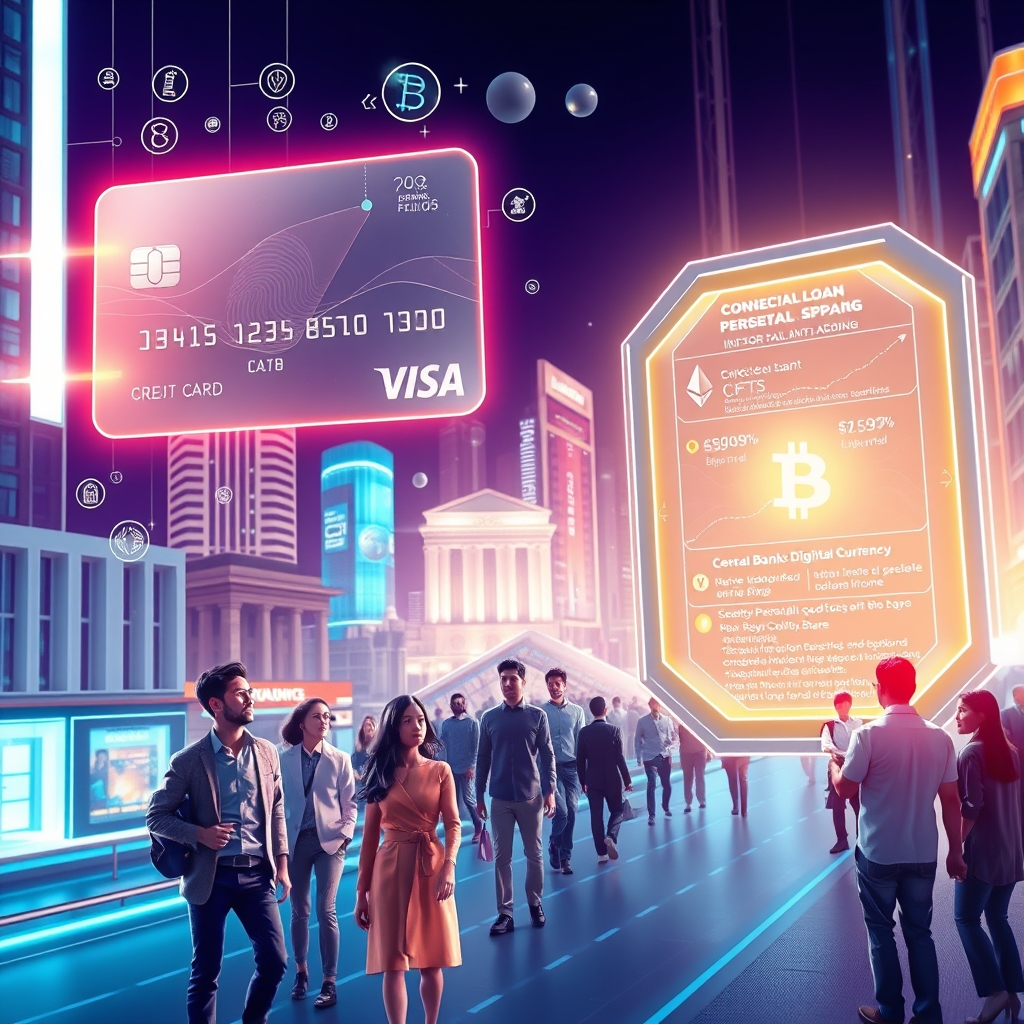
The financial landscape is evolving at an unprecedented pace, reshaping how we manage money, borrow, and transact. By 2026, credit card payments, personal loans, and cryptocurrency will undergo transformative changes driven by technology, regulation, and consumer behavior. This shift promises greater convenience, security, and accessibility—but also new challenges. Understanding these trends now will help you stay ahead in a rapidly changing world.
How Will Credit Card Payments Evolve by 2026?
Credit card payments in 2026 will be faster, smarter, and more secure than ever before. Contactless transactions will dominate, with over 80% of in-store purchases expected to use tap-to-pay technology. Biometric authentication—like fingerprint or facial recognition—will replace traditional PINs, reducing fraud while speeding up checkout times. Furthermore, digital wallets will integrate seamlessly with credit cards, allowing users to manage rewards, budgets, and payments from a single app.
In addition, artificial intelligence will play a crucial role in fraud detection. AI-driven systems will analyze spending patterns in real time, flagging suspicious transactions within milliseconds. This means fewer false declines and better protection against identity theft. However, with these advancements comes the need for stronger data privacy measures. Consumers will demand transparency about how their financial data is used, pushing banks to adopt stricter security protocols.
Will Subscription-Based Credit Cards Replace Traditional Rewards?
Subscription-based credit cards are gaining traction, offering flat-rate cashback or exclusive perks for a monthly fee. By 2026, these models could challenge traditional rewards programs, which often favor high-spenders. Instead of earning points on specific categories, users may prefer a predictable, all-in-one benefit structure. For example, a card might offer 3% cashback on all purchases for a $10 monthly fee, simplifying the rewards process.
However, traditional rewards cards won’t disappear entirely. Travel enthusiasts and big spenders may still prefer tiered rewards systems. The key difference in 2026 will be personalization—AI will tailor rewards based on individual spending habits, making every card feel uniquely beneficial. This shift will force issuers to innovate or risk losing customers to more flexible alternatives.
What Changes Are Coming to Personal Loans in 2026?
Personal loans in 2026 will be more accessible, with faster approvals and lower interest rates for qualified borrowers. Fintech lenders will continue disrupting traditional banks by using alternative credit scoring models. Instead of relying solely on FICO scores, lenders will analyze cash flow, rental history, and even social media activity to assess creditworthiness. This means more people—especially those with thin credit files—will qualify for loans.
Furthermore, loan terms will become more flexible. Borrowers may choose between fixed or variable rates, with options to adjust payments based on income fluctuations. For instance, gig workers could opt for income-driven repayment plans, reducing financial stress during lean months. Additionally, blockchain technology may streamline loan processing, cutting approval times from days to minutes by automating verification and disbursement.
Will Peer-to-Peer Lending Overtake Traditional Banks?
Peer-to-peer (P2P) lending platforms will gain significant market share by 2026, offering competitive rates and a more personalized borrowing experience. These platforms connect borrowers directly with investors, eliminating the middleman and reducing costs. As a result, borrowers may secure lower interest rates, while investors earn higher returns compared to traditional savings accounts.
However, P2P lending won’t completely replace banks. Traditional lenders will retain an edge in offering secured loans, like mortgages, where collateral reduces risk. Moreover, banks will leverage their established trust and regulatory compliance to attract risk-averse borrowers. The future will likely see a hybrid model, where fintech and banks collaborate to offer the best of both worlds.
How Will Cryptocurrency Reshape Finance by 2026?
Cryptocurrency in 2026 will move beyond speculation, becoming a mainstream payment and investment tool. Central bank digital currencies (CBDCs) will gain traction, with over 20 countries expected to launch their own by 2026. These government-backed digital currencies will coexist with decentralized cryptocurrencies like Bitcoin and Ethereum, offering stability and regulatory oversight.
In addition, crypto payments will become more seamless. Major retailers will accept digital currencies, and payment processors will integrate crypto wallets into their platforms. This means consumers can pay with Bitcoin or stablecoins as easily as they use credit cards today. However, volatility will remain a concern, prompting the rise of stablecoins—cryptocurrencies pegged to fiat currencies—to mitigate risk.
Will DeFi Replace Traditional Banking Services?
Decentralized finance (DeFi) will challenge traditional banking by offering borderless, permissionless financial services. By 2026, DeFi platforms could provide lending, borrowing, and savings accounts without intermediaries, reducing fees and increasing accessibility. For example, users might earn higher interest rates on crypto savings accounts compared to traditional banks.
Yet, DeFi won’t replace banks entirely. Regulatory hurdles and security risks—like smart contract vulnerabilities—will limit its mainstream adoption. Instead, DeFi and traditional finance will coexist, with users choosing between them based on their risk tolerance and needs. Banks may even adopt DeFi elements, like blockchain-based settlements, to stay competitive.
What Role Will NFTs Play in Finance by 2026?
Non-fungible tokens (NFTs) will expand beyond digital art, becoming integral to financial services. By 2026, NFTs could represent ownership of real-world assets, like real estate or luxury goods, enabling fractional ownership and easier transfers. For instance, an NFT could tokenize a property, allowing multiple investors to buy shares and earn rental income.
Furthermore, NFTs may revolutionize loyalty programs. Instead of earning points, consumers could receive NFT-based rewards that appreciate in value or unlock exclusive perks. This shift will make loyalty programs more engaging and valuable, driving customer retention. However, regulatory clarity will be essential to prevent fraud and ensure consumer protection.
FAQ: Your Top Questions Answered
Will Credit Card Interest Rates Drop by 2026?
Credit card interest rates may fluctuate based on economic conditions, but technological advancements could lower costs for consumers. AI-driven risk assessment will enable lenders to offer personalized rates, potentially reducing APRs for low-risk borrowers. However, macroeconomic factors, like inflation and federal policies, will ultimately determine rate trends.
Are Personal Loans Safer in 2026 Than Today?
Personal loans will be safer in 2026 due to enhanced fraud detection and regulatory safeguards. Blockchain technology will make loan agreements tamper-proof, while AI will monitor for suspicious activity. However, borrowers must still exercise caution, as scams and predatory lending practices may evolve alongside these advancements.
Can Cryptocurrency Replace Cash by 2026?
Cryptocurrency won’t replace cash entirely by 2026, but it will become a widely accepted alternative. CBDCs will bridge the gap between digital and physical currencies, offering the benefits of crypto with government backing. However, cash will remain relevant for privacy-conscious individuals and in regions with limited digital infrastructure.
Preparing for the Financial Future
The financial world in 2026 will be defined by innovation, accessibility, and choice. Credit card payments will prioritize speed and security, personal loans will become more inclusive, and cryptocurrency will redefine how we think about money. Staying informed and adaptable will be key to navigating these changes successfully.
Whether you’re a consumer, investor, or business owner, embracing these trends early will give you a competitive edge. The future of finance is already unfolding—are you ready to be part of it?
About the Author


