

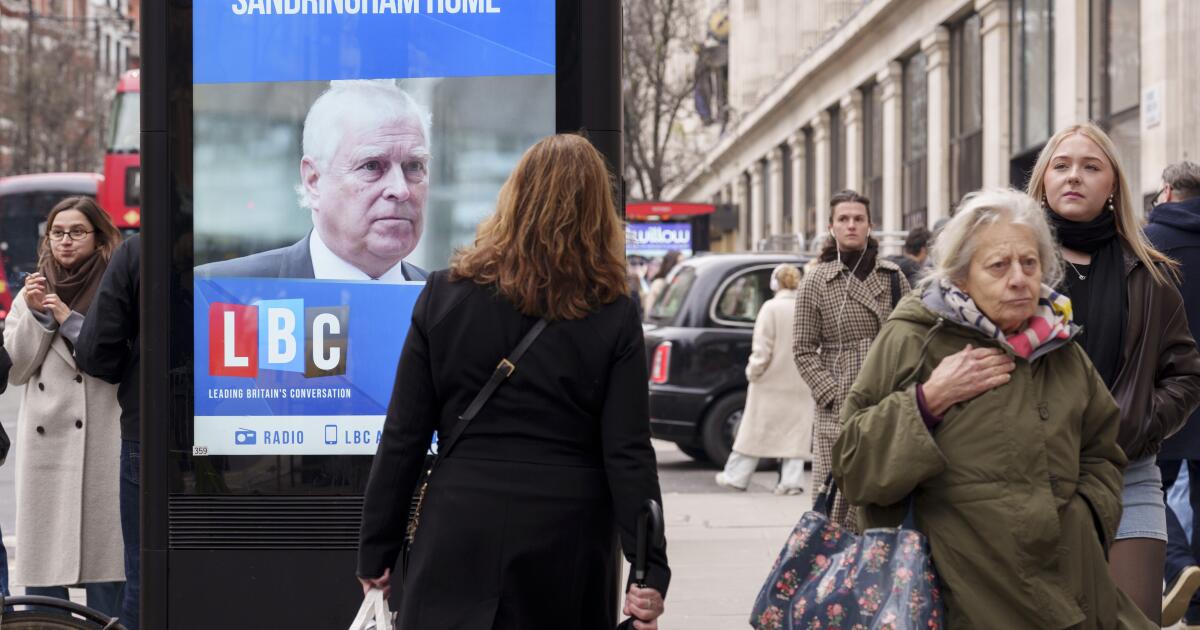
Prince Andrew Arrested. In a historic turn of events that has sent shockwaves through the United Kingdom and the global community, Andrew Mountbatten-Windsor—formerly known as Prince Andrew—was arrested on February 19, 2026.
The arrest, which occurred on the former royal’s 66th birthday, marks a stunning “fall from grace” and represents the first time a senior member of the British Royal Family has been taken into police custody in nearly 400 years.
This investigation is not merely a continuation of past scandals; it is a focused criminal inquiry into allegations of misconduct in public office.
Here is a detailed breakdown of the arrest, the evidence involved, and what this means for the future of the British Monarchy.
1. The Arrest: 8:00 AM at Sandringham
On the morning of Thursday, February 19, unmarked police vehicles and plainclothes officers from Thames Valley Police arrived at Wood Farm, a residence on King Charles III’s private Sandringham Estate in Norfolk.
Andrew was taken into custody and transported to Aylsham Police Station, where he was reportedly held in a standard custody suite—a stark contrast to the palaces he once occupied. After roughly 11 hours of questioning, he was released under investigation on Thursday evening. While he has not yet been formally charged, the “released under investigation” status means the criminal probe is active and ongoing.
2. The Core Allegation: Misconduct in Public Office
While much of the public’s attention remains on Andrew’s previous civil settlements, this specific arrest centers on his decade-long tenure as the U.K.’s Special Representative for International Trade and Investment (2001–2011).
The investigation was triggered by the January 30, 2026, release of millions of pages of “Epstein Files” by the U.S. Department of Justice. These documents allegedly contain:
- Confidential Leaks: Emails appearing to show Andrew forwarding sensitive government trade reports to Jeffrey Epstein just minutes after receiving them.
- Economic Intelligence: Briefings on investment opportunities in Asian markets (including Singapore and Hong Kong) and reconstruction plans in Afghanistan that were allegedly shared with the disgraced financier.
- Breach of Trust: Prosecutors are examining whether Andrew used his taxpayer-funded role to provide Epstein with “insider” information that could be used for private financial gain.
Under English law, Misconduct in Public Office is a serious common-law offense. It occurs when a public official willfully neglects their duty or abuses their power to such a degree that it amounts to an abuse of the public’s trust. If convicted, the offense carries a maximum sentence of life imprisonment.
3. Search Warrants and Evidence Gathering
The arrest was accompanied by simultaneous police searches across two major properties:
- Wood Farm (Norfolk): His current residence at Sandringham.
- Royal Lodge (Windsor): His former home, which he was forced to vacate by King Charles III just weeks earlier on February 4, 2026.
Detectives are reportedly looking for electronic devices, physical correspondence, and “blue books” (official diaries) that could corroborate the timestamps found in the leaked American files.
4. The Palace Response: “The Law Must Take Its Course”
The reaction from Buckingham Palace has been described by royal commentators as “clinical and decisive.” King Charles III issued a formal statement expressing his “deepest concern” but emphasized a policy of non-interference.
“Let me state clearly: the law must take its course. In this, the police have our full and wholehearted support and cooperation.” — King Charles III
This statement confirms that the King will not provide a “sovereign shield” for his brother. This follows the King’s late 2025 decision to formally strip Andrew of all remaining titles and honors, effectively making him a private citizen in the eyes of the law.
5. International Implications and the US Connection
The investigation has created a diplomatic headache for the British government. Prime Minister Keir Starmer has faced questions regarding the “transparency” of the Royal Family, particularly after the Epstein files also implicated other high-ranking British figures.
In Washington, U.S. Attorney General Pam Bondi testified before the House Judiciary Committee on February 11, displaying redacted photographs of Andrew found in the Epstein archives. There is mounting pressure from U.S. lawmakers for Andrew to finally sit for an interview with the FBI, a request he has notoriously avoided for years.
6. The Victim’s Perspective
The family of Virginia Giuffre, who passed away in 2025, released a statement following the arrest. They expressed that while Virginia is no longer here to see this moment, the arrest serves as a testament that “no one is above the law.” Her posthumous memoir, released late last year, is believed to have provided the final “moral momentum” needed for the U.K. authorities to open this criminal case.
Summary: What Happens Next?
As of late February 2026, the investigation remains in the hands of the Crown Prosecution Service (CPS). They must now decide if the evidence from the Epstein files and the police searches meets the threshold for a formal criminal charge.
If charged, a trial would likely become the “trial of the century,” pitting the traditions of the British Monarchy against modern standards of public accountability. For now, the man once known as the Duke of York remains at Sandringham, awaiting the next move from Thames Valley Police.
About the Author


