
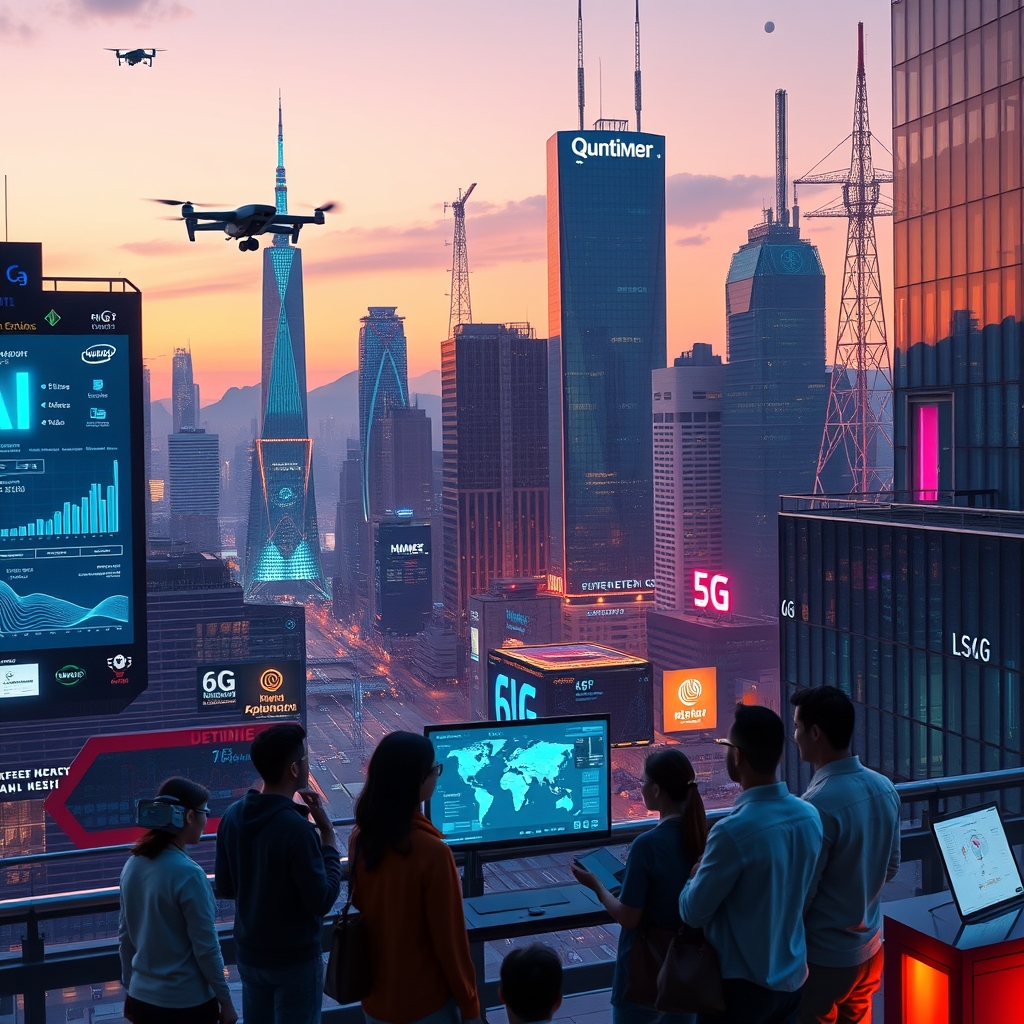
Technology in 2026 is set to redefine how we live, work, and interact with the world. From groundbreaking advancements in artificial intelligence to revolutionary shifts in sustainability, the next two years promise transformative changes. Businesses, governments, and individuals must stay ahead of these trends to leverage opportunities and navigate challenges. This article explores the most impactful trends in technology news for 2026, offering insights into what’s next for innovation.
Why Are Technology Trends in 2026 a Game-Changer?
By 2026, technology will no longer be a tool but an integral part of daily life. The fusion of digital and physical realities, coupled with unprecedented computational power, will create smarter, more efficient systems. Companies investing in these trends will gain a competitive edge, while consumers will experience seamless, personalized interactions. However, with great innovation comes responsibility, as ethical and security concerns take center stage.
Furthermore, the global tech market is projected to grow by over 15% annually, reaching a valuation of $8.5 trillion by 2026. This surge is driven by demand for automation, cloud computing, and next-generation connectivity. As industries adapt, understanding these trends will be crucial for success.
How Will Artificial Intelligence Dominate 2026?
Artificial intelligence (AI) will evolve from a supportive tool to a core driver of decision-making. By 2026, AI models will process data 50 times faster than today, enabling real-time analytics and predictive insights. Businesses will rely on AI to optimize supply chains, enhance customer experiences, and even automate complex tasks like legal documentation.
In addition, AI will become more accessible to small and medium-sized enterprises (SMEs). Cloud-based AI platforms will reduce costs, allowing businesses of all sizes to integrate machine learning into their operations. However, concerns about bias, transparency, and job displacement will spark debates on regulation and ethical AI development.
What Role Will Quantum Computing Play in 2026?
Quantum computing is no longer a distant dream—it’s becoming a reality. By 2026, early commercial applications of quantum computing will emerge, particularly in drug discovery, cryptography, and financial modeling. Companies like IBM and Google are already testing quantum processors with over 1,000 qubits, a milestone that will unlock new possibilities in computational power.
Besides its scientific applications, quantum computing will revolutionize cybersecurity. Traditional encryption methods will become obsolete as quantum algorithms crack them effortlessly. To counter this, businesses will adopt quantum-resistant encryption, ensuring data security in an era of unprecedented threats.
Will 6G Networks Become a Reality by 2026?
While 5G is still rolling out globally, research on 6G is already underway. By 2026, early prototypes of 6G networks will debut, offering speeds up to 100 times faster than 5G. This leap will enable near-instantaneous communication, supporting advancements in autonomous vehicles, remote surgery, and immersive augmented reality (AR) experiences.
Furthermore, 6G will prioritize sustainability, using energy-efficient technologies to reduce carbon footprints. Governments and telecom companies will collaborate to deploy these networks, ensuring global connectivity reaches even the most remote areas. The race to 6G will redefine how we interact with technology, making lag and latency a thing of the past.
How Is Sustainability Driving Tech Innovation in 2026?
Sustainability is no longer an option—it’s a necessity. By 2026, tech companies will prioritize green solutions, from energy-efficient data centers to biodegradable electronics. The global market for sustainable tech is expected to exceed $1.2 trillion, driven by consumer demand and regulatory pressures.
In addition, circular economy models will gain traction, encouraging companies to recycle and repurpose electronic waste. Innovations like solar-powered devices and AI-driven energy management systems will reduce environmental impact while maintaining performance. Businesses that embrace sustainability will not only comply with regulations but also attract eco-conscious consumers.
What’s Next for Augmented and Virtual Reality?
Augmented reality (AR) and virtual reality (VR) will move beyond gaming and entertainment. By 2026, these technologies will transform industries like healthcare, education, and retail. Surgeons will use AR for precision-guided procedures, while students will attend virtual classrooms with immersive 3D learning experiences.
Furthermore, the metaverse will evolve into a fully integrated digital ecosystem. Companies will host virtual meetings, product launches, and even concerts in the metaverse, blurring the lines between physical and digital realities. With a projected market value of $800 billion by 2026, AR and VR will redefine human interaction.
How Will Cybersecurity Adapt to New Threats in 2026?
As technology advances, so do cyber threats. By 2026, cybersecurity will shift from reactive to proactive, using AI and machine learning to predict and prevent attacks. Zero-trust security models will become the standard, requiring continuous authentication for access to sensitive data.
Besides AI-driven defenses, blockchain technology will play a crucial role in securing transactions and identities. Decentralized identity solutions will give users control over their personal data, reducing the risk of breaches. With cybercrime costs projected to reach $10.5 trillion annually by 2026, robust security measures will be non-negotiable.
What Impact Will Robotics Have on Industries by 2026?
Robotics will revolutionize manufacturing, logistics, and healthcare. By 2026, collaborative robots (cobots) will work alongside humans in factories, increasing efficiency and safety. In healthcare, robotic assistants will perform surgeries with unmatched precision, reducing human error.
In addition, autonomous drones will dominate last-mile delivery, cutting costs and improving speed. The global robotics market is expected to grow by 25% annually, driven by advancements in AI and sensor technology. Businesses that integrate robotics will gain a significant advantage in productivity and innovation.
FAQ: Your Top Questions About Trends Technology News 2026 Answered
What Are the Biggest Tech Trends in 2026?
The biggest tech trends in 2026 include AI-driven automation, quantum computing, 6G networks, sustainable technology, AR/VR advancements, and cybersecurity innovations. These trends will shape industries, economies, and daily life, offering new opportunities for growth and efficiency.
How Will AI Change the Job Market by 2026?
AI will automate repetitive tasks, freeing up human workers for creative and strategic roles. While some jobs may become obsolete, new roles in AI management, ethics, and development will emerge. By 2026, AI is expected to create over 97 million new jobs globally, offsetting losses in traditional sectors.
Is 6G Technology Worth the Hype in 2026?
Yes, 6G technology will be a game-changer, offering ultra-fast speeds, low latency, and seamless connectivity. It will enable innovations like holographic communication, smart cities, and autonomous systems. Early adopters will gain a competitive edge in industries reliant on real-time data.
Embracing the Future: Why Staying Updated on Trends Technology News 2026 Matters
The technology landscape in 2026 will be unrecognizable compared to today. From AI and quantum computing to 6G and sustainability, these trends will redefine industries and societies. Businesses that adapt early will thrive, while those resistant to change risk falling behind.
Furthermore, individuals must stay informed to navigate this evolving digital world. Whether it’s leveraging AI for personal productivity or understanding the implications of quantum computing, knowledge is power. The future of technology is here—are you ready to embrace it?
About the Author


